Operational automation built for how service businesses run
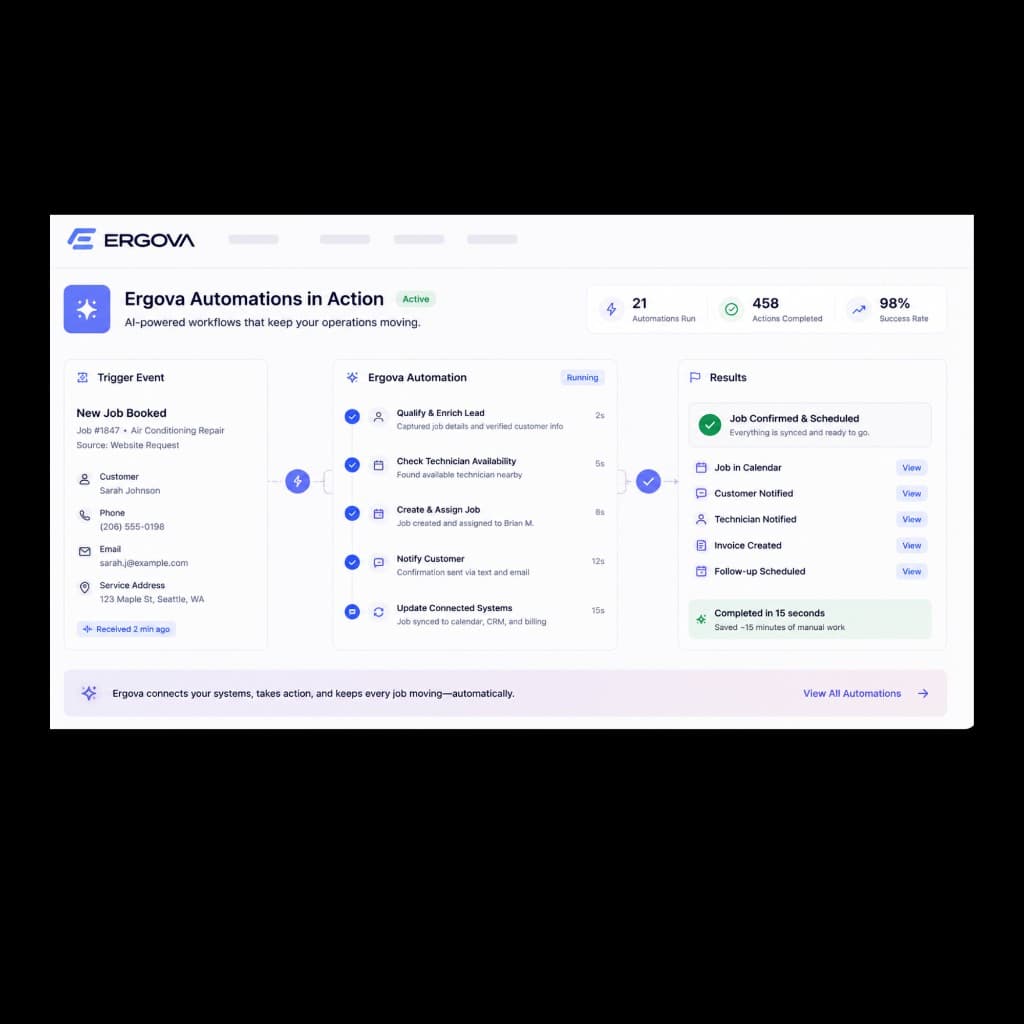
Ergova turns triggers, conditions, and actions into reliable workflows across scheduling, dispatch, follow-up, invoicing, and customer communication—so your team executes on rules, not inbox reminders.
Real objects
Automate on leads, estimates, jobs, invoices—not generic tasks
Full audit trail
Every run logged with trigger, conditions, and outcome
Version control
Rules ship with history—roll forward or revert with confidence
Immediate execution
Trigger to action in seconds, not batch jobs overnight
Most teams spend too much time pushing work forward manually
Every stage needs a nudge: reminders, status flips, owner assignment, hand-offs to dispatch and billing. When those steps live in people's heads, work stalls—or gets duplicated across tools nobody trusts.
Disconnected systems show records, but they don't run the process. Ergova closes the gap between “something happened” and “the next right thing happened.”
Manual follow-up
CSRs and estimators re-chase the same approvals and callbacks.
Repetitive admin work
Copy-paste updates between dispatch boards, CRM rows, and spreadsheets.
Workflow delays
Jobs sit between stages because nobody owns the next keystroke.
Dropped hand-offs
Approved work doesn't land in ops cleanly—context leaks on the way.
Automate the work between the work—in one operating system
- Triggers and actions tied to real objects: leads, estimates, jobs, invoices
- Faster hand-offs between intake, field, and finance without inbox ping-pong
- Less repetitive office work; more execution on customer-facing outcomes
- Consistent follow-through when the day gets noisy
- Operational rhythm your team can rely on—not heroics
Explore workflow automation
Three layers of automation—infrastructure, events, and execution—designed to work together inside Ergova.
Integrations & data flow
Connect systems
Unify leads, jobs, dispatch, billing, and communication so automations run on one operational record—not brittle syncs.
Learn moreEvent-driven automation
Trigger events
Launch the right follow-up from lifecycle changes, customer events, and revenue thresholds—deterministic and auditable.
Learn moreExecution & hand-offs
Keep jobs moving
Advance work through stages automatically—assign owners, notify dispatch, queue invoices, and recover stalled sequences.
Learn more
How Workflow Automation works
From signal to execution—without another standing meeting about process.
- Step 1
Detect the trigger
Watch for events: new leads, approvals, delayed jobs, completed visits, overdue balances.
- Step 2
Run the action
Send reminders, update statuses, assign owners, notify dispatch, or advance billing—automatically.
- Step 3
Keep the business moving
Reduce friction across the operation so predictable work stops eating operator time.
What Workflow Automation looks like in Ergova
Rules with triggers, conditions, and actions—plus an audit trail of what ran—so ops can trust the process under load.
Automation rules
Triggers · conditions · actions
| Workflow | Trigger | Stage | Status |
|---|---|---|---|
| Estimate approved → job | Approval recorded | Sales → Ops | On |
| Invoice overdue reminder | Balance > 7d | Collections | On |
| Lead no follow-up 2h | SLA breach risk | Intake | On |
| Job completed → invoice | Status = complete | Field → Billing | Paused |
Recent runs
10:42 AM
Estimate EST-4412 approved → Job J-883 created · dispatch SMS
10:18 AM
Lead #7721 · 2h idle → task to J. Rivera
9:55 AM
INV-2812 overdue → reminder sent · AR flagged
Ergova automates operations in the context of the business
Generic automation tools don't understand service workflows. Ergova fires the right action when stage, urgency, and customer context line up—so automations feel native, not fragile.
Context-aware triggers
Fire based on workflow stage, urgency, and business conditions—not cron alone.
Smart escalation
Route stalled work to the right owner before delays become customer issues.
Workflow recovery
Detect broken sequences and advance them with guardrails.
Next best automation
Surface repeatable steps that should graduate from manual to automated.
Deterministic rules
Conditions and guardrails make outcomes predictable—no black-box surprises for ops.
Audit-ready logs
Every run recorded: who triggered what, when, and what changed downstream.
Safe rollouts
Test rules, pause workflows, and version changes before production load hits.
Enterprise governance
Permissions and admin controls align with how IT and ops teams govern change.
Automation infrastructure you can trust at scale
Enterprise operators need more than zap-and-pray integrations. Ergova gives you versioned rules, full execution history, and controls that match how serious teams ship process change.
Pair with Revenue Alerts when automated actions should surface risk—same objects, same history, less noise.
Do less manual work. Move faster.
Automation compounds: fewer dropped balls, tighter AR, and operators who spend time on judgment—not keystrokes.
Less admin
Reduce manual follow-up workload
Reminders and status moves run without another queue.
Faster flow
Automate repetitive workflow steps
Hand-offs advance the moment conditions are met.
Consistency
Improve process consistency
Same playbook every shift—fewer "only Sarah knows" paths.
Operator time
Free up more operator time
Leadership and dispatch focus on exceptions, not every nudge.
Connected to the rest of your operation
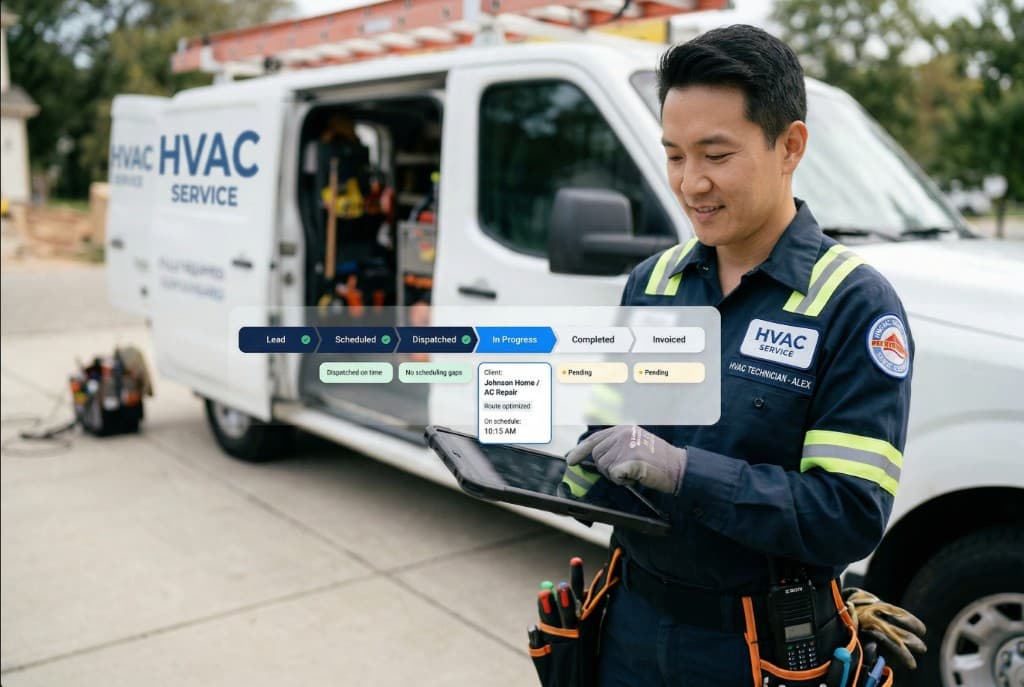
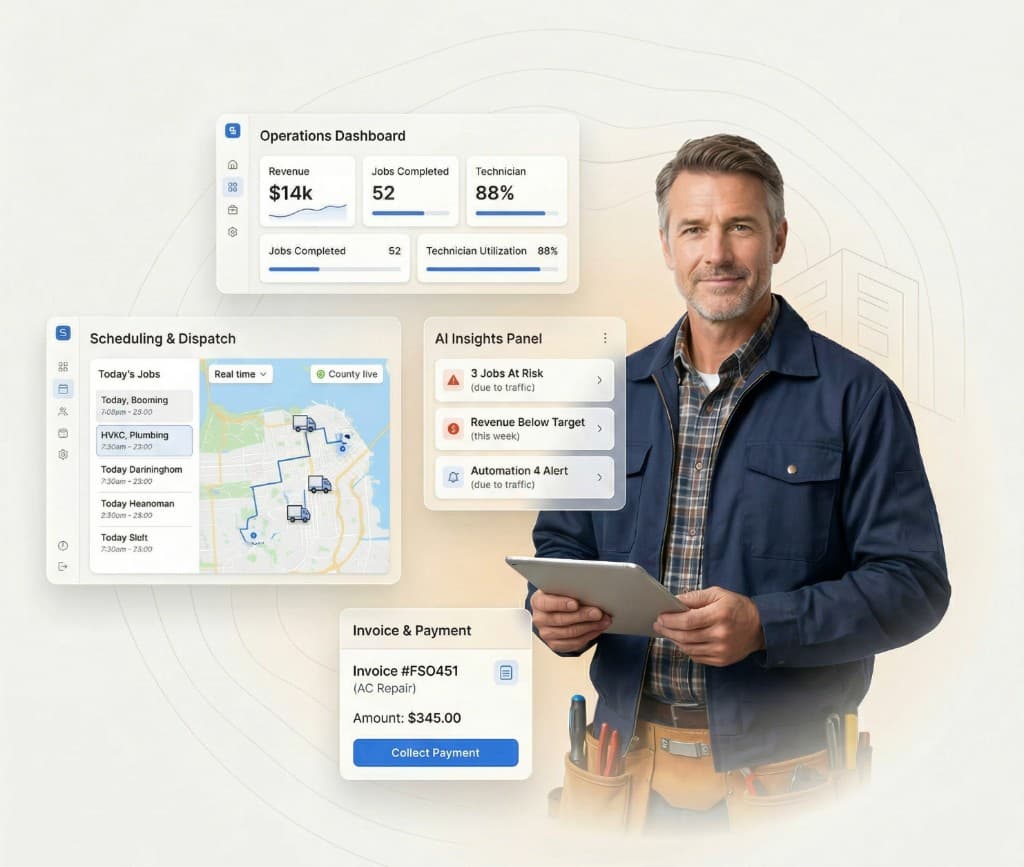
The job lifecycle runs through Ergova—automation overlays each stage so nothing waits on a manual pass when the rules are clear.
Run the business on rules—not reminders
See how Ergova helps your team automate repetitive work, speed up execution, and keep operations moving with enterprise-grade workflow infrastructure.